
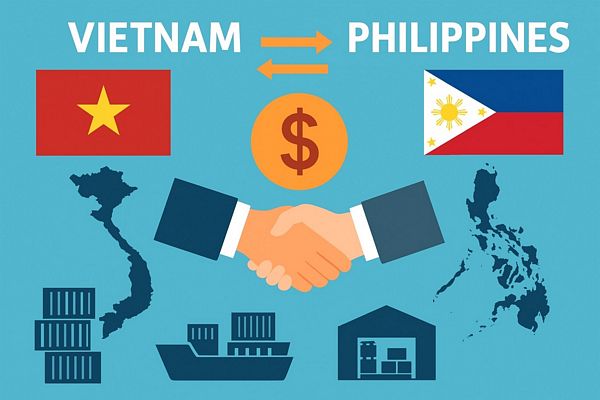
Trade relations between Vietnam and the Philippines have strengthened significantly over the past two decades, becoming one of the most dynamic bilateral economic partnerships within the Association of Southeast Asian Nations (ASEAN). With complementary economic structures, strong political ties, and shared regional goals, Vietnam and the Philippines continue to deepen cooperation across trade, investment, agriculture, manufacturing, and digital economy sectors.
In 2024–2025, bilateral trade growth remains resilient despite global economic uncertainties, supply chain disruptions, and geopolitical tensions. The partnership now plays a crucial role in reinforcing ASEAN’s internal supply chains, food security, and industrial manufacturing.
Overview of Vietnam–Philippines Trade Volume
Vietnam is currently one of the Philippines’ largest trading partners in Southeast Asia. Bilateral trade turnover has expanded rapidly, growing from under USD 1 billion in the early 2000s to over USD 8–9 billion annually in recent years, with steady upward momentum.
Vietnam consistently records a trade surplus with the Philippines, mainly driven by strong exports in:
- Rice and agricultural products
- Electronics and machinery
- Construction materials
- Textile and footwear products
- Smartphones and consumer electronics
Meanwhile, the Philippines exports to Vietnam:
- Electronic components
- Machinery parts
- Processed food products
- Chemicals and plastics
- Automotive components
This trade structure reflects the production specialization of each economy and the growing integration of regional manufacturing supply chains.
Key Drivers of Bilateral Trade Growth
1. ASEAN Free Trade Agreements
Both countries benefit directly from major regional trade frameworks such as:
- ASEAN Free Trade Area (AFTA)
- Regional Comprehensive Economic Partnership (RCEP)
These agreements significantly reduce tariffs, improve customs procedures, and enhance cross-border supply chain efficiency.
2. Agricultural and Food Security Cooperation
Vietnam is a strategic rice supplier to the Philippines, playing a vital role in stabilizing Philippine domestic rice prices and food security. Long-term government-to-government agreements and private-sector trading contracts help ensure consistent supply even during global shortages.
3. Manufacturing and Industrial Expansion
Vietnam’s rapid industrialization makes it a key supplier of industrial products to the Philippines, including:
- Electrical equipment
- Steel and construction materials
- Industrial machinery
At the same time, Philippine semiconductor and electronics components strengthen Vietnam’s export manufacturing capacity, particularly in smartphones, consumer electronics, and automotive parts.
4. Digital Economy and Services
Beyond physical goods, digital trade, IT services, fintech, and e-commerce cooperation between Vietnamese and Philippine companies is quietly expanding, driven by young populations and fast digital adoption.
Investment Relations Between Vietnam and the Philippines
Investment flows are also gaining momentum. Philippine corporations have expanded into Vietnam’s:
- Real estate
- Hospitality
- Energy
- Retail
- Food processing sectors
Meanwhile, Vietnamese firms are increasingly exploring opportunities in the Philippines’:
- Agriculture
- Renewable energy
- Infrastructure
- Telecommunications
Bilateral investment agreements provide legal protection, transparency, and improved market access for enterprises from both sides.
Political and Strategic Cooperation Supports Trade
Vietnam and the Philippines maintain strong diplomatic ties, particularly on:
- South China Sea maritime security
- ASEAN centrality
- Regional supply chain resilience
Stable political relations act as a foundation for long-term trade certainty, encouraging large-scale cross-border investment projects.
Challenges in Vietnam–Philippines Trade Relations
Despite strong momentum, some challenges remain:
- Logistics costs and port congestion
- Non-tariff technical barriers
- Differences in regulatory standards
- Agricultural import dependency risks
- Exposure to global inflation and currency fluctuations
However, both governments are actively working to modernize customs systems, harmonize product standards, and improve digital trade platforms.
Future Outlook: Strong Growth Potential Through 2030
Looking ahead, Vietnam–Philippines trade relations are expected to expand further in:
- Renewable energy cooperation
- Digital economy and fintech services
- Smart manufacturing
- Sustainable agriculture
- Green logistics
With both nations targeting high-income economic status in coming decades, bilateral trade is projected to surpass USD 10–12 billion annually by 2030 under favorable macroeconomic conditions.
The partnership not only strengthens both national economies but also reinforces the resilience of ASEAN’s internal trade ecosystem amid rising global fragmentation.
Related questions about Vietnam-Philippines trade relations
What are Vietnam’s main exports to the Philippines?
Vietnam mainly exports rice, electronics, textiles, shoes, construction materials, machinery, and smartphones to the Philippines.
What does the Philippines export to Vietnam?
The Philippines exports electronic components, industrial machinery parts, chemicals, plastics, and processed food to Vietnam.
Is Vietnam the Philippines’ largest rice supplier?
Vietnam is consistently one of the largest rice suppliers to the Philippines, ensuring food security and price stability.
How does ASEAN support Vietnam–Philippines trade?
ASEAN trade agreements such as AFTA and RCEP reduce tariffs, simplify customs procedures, and encourage regional supply chain integration.
What is the future of Vietnam–Philippines trade?
The outlook is highly positive, with strong growth expected in renewable energy, digital services, smart manufacturing, and sustainable agriculture.

Leave a Reply